
“I’d like to be canonized,” Bow said to me. She was the smallest friend I had, not in the waist. She was narrow-minded, book-smart, and needed someone. She had a habit of reading while walking. And she had a habit of quoting from the books she read.
Her family owned a Chinese restaurant. She was Korean, I think. I ate there a lot, and it always made my stomach ache. Something wasn’t right in the sauces.
She was reading a sloppy translation.
“It’s Murasaki Shikibu, idiot.”
I guess I shouldn’t have been staring at her for so long. She probably thought I was looking at her chest.
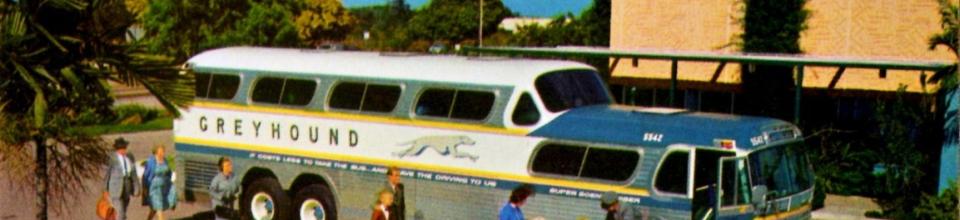
The Greyhound was overfull, heated with people. I didn’t like how it made me hot, oven-ripe. The seats were lined, grey, and depressing. Luckily, I could see out the windows. On my last trip, the windows were smudged. All of them. I guessed it was New York that made the windows dirty.
The heat made my underarms wet and the sweat soaked through my shirt. My ex thought I looked great in navy polos. My skin was too dark, and I’ve only worn them twice since I left Kuwait fifteen years ago. 1996 was the first year that I flew on an airplane and the first time I visited New York. I started dating Karen then. Nice ass, but she wasn’t what I wanted. That’s also why I left Kuwait University, because it just didn’t fit. I can’t remember how I met Karen, I remember though, she was wearing denim shorts. I liked the way she ordered drinks, and I really shouldn’t be thinking about her.
I hadn’t eaten, and that was probably why I could smell everything. I swear there was a cook somewhere on this bus. I smelled sourdough, something bready. Or maybe, since we just passed Kings Street, it was Hanston Bakery. I hadn’t been there, but a few years ago Karen brought home the most delicious bread loaves I’d ever tasted, better than the loaves my mother used to make.
I thought I was nearly past it, past remembering home in Kuwait. But I’m imagining myself there, kicking aside the rubble and sucking in the pizza from the Papa John’s down the street. It was new then, like the Hard Rock Café, but it was worth being there. I sucked through my teeth.
I’d spent eighteen years in Kuwait, and my parents still lived there now. For ten years, I couldn’t speak English. My father spoke it fluently, but only when he had too. He was a businessman and America, he said, is where all the money was.
My father had told me, Don’t forget your mother you, if change t hell.
“As with you,” I said to him. It was short because I hated him.
My parents told me I had Auditory Processing Disorder. I could understand them. I just chose not to listen.
I’m thirty-three and I don’t listen. That could be why Karen left me. But now, I had Bow.
I blame Kuwait, Bow.
“What?” I blame Kuwait. “For what?” I dunno. “You’re being transcendental right now.” I know. “Your ear is bleeding.” I know. That’s gross.
That place hurt my ears to such an extent that I lost hearing in my left one. It bled every so often and I wanted desperately to understand what the other heard.
I took a tissue from the pack in my pocket and dabbed my ear. It bled when I was in Kuwait too, probably more.
Rama caught me at the airport back then at Kuwait International, he called and said he was only four minutes behind me all the way from the house. Knowing him, he was. Rama had an ear for change. He just missed my birth, being only fifteen minutes behind me in the hospital. Our mothers had brothers for husbands. We grew up together in our backyards, fenced in close because our neighbors had dogs. We raced and would jump over the fence to get something we threw over the top.
Rama was always right behind me, and I wanted to write that in the dirt next to his grave after the funeral in 1996. I wanted to write fifteen minutes or 15, but the ground was too soft and wouldn’t hold the likeness, no matter how many times I stamped it with my first finger. Third week in America and he gets hit by a bus.
I shouldn’t be thinking about Rama.
A lot of people travel at 3:00pm, it’s proven. I know I do. I wish the trip were faster. I always take the Greyhound instead of the trolley. They say Greyhounds are faster because they don’t make as many stops as the in-city buses. That’s not true, but I really don’t remember how long it took to get to Battery Park on a trolley. I only ride in November when the Poet’s House gives their event of the year.
They have a monument there called “The Sphere.” We aren’t supposed to touch the Sphere, but I try. I haven’t done it yet.
Poet’s House only has poetry events. I don’t like poetry. I did try writing a book, once. It was about the inventor of popcorn, which was really about the inventor of corn, which ended up being about Children of the Corn, so I had to scrap it.
Last year Battery Park was nearly full, bigger than the year before. So many people crowded around the stage they set up next to the fountains. I don’t remember what the poets spoke about, but I remember that one of the writers had a pretty face. Her voice was like a singer’s, like my mother when she used to hum while making dessert. I don’t remember her humming any other time, especially when making food.
The girl, though. She had a mole on the side of her cheek. I really didn’t like her poetry.
People crowded against the glass, shoulder to shoulder alongside the windows as our Greyhound passed Thirty-Second Street. I could see down the dark alley we had just passed. Thomas was down there I’m sure.
You know Thomas, Bow? “Who?” Thomas. “Thomas…” You know, that guy you were reading last year on the trip? “The trip to the poetry reading?” Yeah. “That was Chaucer.” Damn, what was his first name? “Geoffrey.”
…
“Better hurry up.” One guy wasn’t talking about the bus ride, but I think the other guy was.
“Babylonian whore,” said the other.
“Did you really just call me that?”
“Yeah, what you gunna do bout it, Gloriana?”
“You read too much, Spenser.”
The second guy sitting toward the inside was the one called Gloriana. His face was red, not from talking, but because of a rash. It covered everything except his nose. The guy closer to the aisle was talking about Gloriana’s shirt, for sure. The white color just peeked from under the stiffness of his outer coat. He was a minister that I’d seen in every church this side of New York. His white skull top made him look weak, but I only think that because my grandfather died bald. My grandfather killed his kidneys and maybe this guy was killing his too.
“How much money you got?”
They were definitely like the kids from Stand by Me, and Gloriana was the kid that barfs. He was weak-hearted, or was it big-hearted? I saw him open his wallet but I couldn’t see what was inside.
The other guy was a bit younger and he didn’t have a habit on. He was a fake blonde, I expect, because the hair under his black cap was too light for his skin.
We passed a church, small, minimal, but I liked it. The headstones were tilted. The ground, hard within eye-length, sank at its pulpit.
I remembered a day when my grandfather was buried. It wasn’t the day he was buried, but a day when I remembered that he was buried. He wore all white and May chastened him with a sunlight that hurt our eyes—my sister Kira and I. Kira kept a small dog in her purse because that’s what Paris Hilton did. The dog was stuffed though, because our parents wouldn’t allow her to keep a real one. Or, perhaps what blinded me were the sunglasses that my brother wore across from me. Our father had stamped them into the ground. My brother said that was how he hid his grief. Father said that he should become a man.
My brother followed me to New York less than a year after I left. We both had attended University and he should have stayed. Last time I heard he was in Ohio, maybe Indiana. For wanting to go home so badly, he never did.
It was June when my grandfather died, but I think it was May when he really died.
“We got to take a detour everyone, so expect to get wherever you’re going about thirty minutes late,” said our driver.
I don’t think anyone liked the driver. I swore he was the guy who sold me a fake Rolex last year. He had that look. You know, the one that says—you know me from somewhere, but I bet you don’t want to remember. So you won’t. I bet he sold other things.
We passed a few shops. There were a lot of people, and some were carrying pretzels.
A cook, I could smell her. Bready, like I thought I smelled before. She was pregnant with a monster; her shirt bulged but didn’t come to a head at the middle but appeared to the side. I think she was jelly-filled. A pastry slipped out from under her left arm, between the folds of her dress. She sneaked a bite, the jelly filling spilling into the creases of her mouth. I figured that she had more of them stuffed under her skirt. She then slipped the pastry back between the fold. She was reading a Seventeen magazine, and one of the captions on the front read, “Still Calling It a Diet!”
Have you lost weight? “Do I know you?” No. “Well, I’m on a diet.” It’s working. “Do I know you?” I think I’ve seen you before. “Really?” Yeah, you take the bus a lot. “Yeah, I do.” Well, you look good.
The cook shifted her dress and the pastry fell between her legs. I pretended not to notice. The lady moved her purse so it would cover the pastry.
Muggers know fake purses when they see them, but I doubt it would really matter. I was mugged on a Greyhound last spring. They bulged their forefinger into their coat pocket. The tip I knew was smaller than a pistol. It might have been one of those tiny British cricket guns and I would’ve been blown out the window.
“Give me your wallet.” I did, but I didn’t miss the forty dollars. I missed my Ace. It was stuck in the wide fold. It was the winning card from a poker game at Hardings Casino last year. It was a damn good game because I won a trip to Hawaii. My mother, visiting that year from Kuwait, said that next I’d find love. First money. Second love. Third heaven. It was a hard trip to sell, so that’s why I took my mother.
Mother, I don’t need that. Yes, you do. I doubt it would ever be useful. What wouldn’t? Love. Oh, you know yo father and fel in love on at. It was the m st be iful ever. He gave e a ring cupcake the waiter erv ed it to us. It was on a lo n bo t .
I’d only been back two weeks. The pink and yellow leis were still stuffed in the side-pocket of my suitcase. I looked up, saw the bulge, and turned to Bow.
You remember that trip I took to Hawaii? “Yeah..?” Well, I want to go back. “Yeah?” Would you go? “Yes.” With—
A boy, the one sitting directly across the aisle from me, reached out and grabbed my hand. It was ethereal, soft, but it still made me jump. He must have liked to draw because his lap was full of sketches. He was a cute kid but those eyes are what made him. He looked about nine and I hadn’t really noticed him until now. He was short, because he was so young, but more quiet than I would’ve expected. He’d grow up and win more women than I ever had.
He smiled widely, his teeth were lightly yellowed but large. He looked at me, and his child eyes were like overripe fruit. He stared me down. He wanted to win a battle we’d never fought, and then his father called him back.
“Jonas, leave him alone.”
Jonas withdrew and then I really saw it – his eye-skin was glazed white.
I guessed he had been blind for a long time. I wish I could say that I wasn’t surprised. The dust gets into the eyes and they scratch it out.
His father must’ve used a cleaver lately. The red lines between his fingers gave him away. I could imagine the bloody outbursts from the headless chicken. He must’ve been a butcher. They were Eastern, but I didn’t know how far.
“I kill cow’s to feed the hungry population. Meat. Meat. Meat. You have to be strong. You have to be slow, enough to concentrate. Enough to take your time. You have to be politically able to run around kissing corporate. Now we have to be able to step back and say, ‘Off with its head!’” These words could have been in The Jungle. I made it up. The guy reminded me of Jurgis.
“My damn scarf!” The woman who yelled was larger than I expected. She sat in the farthest seats in the back, a large suitcase at her feet, another occupying the space next to her in the bus aisle. Her coarse yellowed hair was let loose from the scarf that had escaped out the window.
“Sounds like your scarf hit a car!” said Jonas’s father. We heard honks from behind us.
The Lady’s pygmy nose scrunched and she again stuck half her head out the window and looked against the traffic. She never asked to stop the bus, but looked on. I thought she was an actress.
“Shit. Well, I have more,” she said, settling back into her seat, the roundness of her ass making the suitcase in the aisle tip over.
Jonas’s father left him and joined the woman alone in the back. I saw him offer her his own handkerchief that he pulled from his own pocket. It was red and looked too American.
“Oh no, please, no thank you,” she said holding well-trimmed nails claw-like, pushing the handkerchief away.
“A Lady shouldn’t go without a head covering.”
I am not sure if he meant because she was a woman or because she was once wearing her own head wrap.
“Love is unconquerable.” What, Bow? “Rich men of any sort aren’t keepers. Are you quoting someone?
“I would keep a vigil for all dumb women.” Are you talking about her? “Oh, Sophocles, you damn fool, woman have the money.” I think I need to take you out more.
Bow started reading her book again, intent on finishing The Tale of Genji before we arrived at Battery Park. She’d been working on completing the book since I’ve known her. She only read when she was moving, which made her legs long and thin.
I shouldn’t be thinking about her legs.
The lady was still talking to Jonas’s father.
“I appreciate it, but I’ve got plenty more. I own a textile factory,” she said, grinning as if holding a fistful of money behind her back.
“Where?”
“Here. In the city.”
“Keep the wrap,” he said. He was insistent, and shoved the material at her. She was holding it now, the lump of red dripping down her hand, although it wasn’t worn, the material looked thin.
The Lady looked stunned, her mouth gapped so I could see the beginnings of her buckteeth.
“See how much I need this?” She let the red mop be sucked out the window.
Jonas’s father didn’t hear, not because he didn’t want to, but because we went through another tunnel.
The trip was taking longer than before, and I’m not sure if the driver knew exactly where we were going. He had a Camel on his lip, but it was unlit. I forgot about the law, but the police officer sitting in the second seat from the front didn’t. He was dressed up nice, but I could tell that he was dirty. The cuff of his collar was ripped into a yellowed stain.
“What?” the cop asked.
I’d looked at him for too long. The road was straight and I needed to be tossed around a little.
Just looking. “Looking at what?” Looking at your seat. “Why?” Thought it was interesting that the second seat is a different shade of blue than the other seats. “You’re right.” I know.
“New York!” said the driver, telling us the detour had ended. “It will be about fifteen minutes with traffic, forty against.”
“Bout damn time…we got closer!”
The outburst came from a wild man who sat in front of the headscarf woman, who had resurrected another scarf out of her suitcase and had it wrapped tightly around her head, making the fat of her forehead bulge. Her pale skin didn’t look good.
Anyway, the man. He had a trench and there were pieces of bread caught in his red, natty hair.
“Turn up the radio!”
Everyone turned to face their windows and others stopped talking. It was awkward, like we were waiting for him to take a swig of the bottle hidden under his trench, but he never did.
The driver turned it up louder and the drunkard smiled and bounced his knee in beat with his head, off beat from the music. I couldn’t help but watch him, and I saw the cook look at him too as well as the headscarf woman. We eyed him. We wanted to be able to act like that. We didn’t want to care.
…
I could see the lights from the stage off Battery Park. It was close. I couldn’t wait, not because I wanted to listen to poetry but because of the people.
We turned onto Church Street.
I’d done this every year since I broke up with Karen. I remembered this part of the trip was always the darkest. I swear it was the tall fences, but they didn’t block the light.
Everyone got quiet. The bus tiptoed. We all looked out the windows, even if we knew that someone’s head was blocking the way.
“It’s like Poe.” Quiet, Bow. “It’s like Edgar Allen Poe.” How? “It’s like his work, you know, something crazy happens and you just can’t look away.” Like what? “In one story he put a person’s heart under the floorboards.” That’s crazy, whose heart? “An old guy.” Did he kill him? “I don’t think he was mad.”
The light we were stopped at took forever, and seemed to be stuck. Bow must have been thinking the same.
Outside, there were people with their fingers through the fence. That light was taking way too long. One kid wearing a side-flapped hat spit on the ground. One young girl was resting her head on the shoulder of the guy next to her. Some teenager screamed, “Remember!” and then laughed as his friends walked past. I wanted to hit him but I don’t know why. The light finally turned green.
“What’s that?” Bow, do you know? “What? The building?” That’s the new one. “Oh, why?” I heard it’s going to be 1,766 feet tall when it’s done. “But why?” The biggest building in the U.S. “That’s stupid.” I think they are building it so we aren’t afraid of it missing anymore.
“Battery Park! Everyone getting off. Get,” said the driver. He was pulling up to the curve where other buses and cars were parked. I could see the stage.
I got up and stretched. We were past the hardest part—Church Street. The woman with the scarves stretched her arms out in front of her and I saw a mole between her breasts. Jonas’s father was putting his drawings into a fabric sorting folder, stuffing the colored pencils in without placing them into the box. Handing the folder to Jonas, he asked, “Are you ready to show them your pictures?”
“I won’t be ready until I’m older, but I will do okay.”
“Good.”
They got off the bus, Jonas not having to feel around to know where to step. I guessed he’d ridden a lot of buses before.
“Let’s get off here,” said Gloriana.
“We still got two more blocks!” The man next to him gave him a side-glance and rose.
“We got to make a stop.”
“Where?”
“Mrs. Henry’s apartment.”
“Geez. Can’t you visit your girlfriend when I’m not with you?”
“She’s dying,” said Gloriana.
“She going to leave you anything?”
They left and I was sure I’d see them again.
The fake blonde stopped in front of me and started fishing around in his pocket.
“Hey, guy. I work for the church. Would you like to buy a pamphlet? It will get you closer to heaven.”
I shook my head, and he kept walking.
Bow said, “What a turd.”
“Everyone off?” The driver turned the handle and the door closed.
“Wait!” I said it too loud, I think. It made him jump, probably because I hadn’t spoken out like the other passengers had during the trip.
“Hurry it up.”
“Bow, let’s go.” I touched her shoulder, getting her attention.
She never even looked up from her book. “I think I’m going to just keep riding.”
“Come on, Bow. You don’t know where this bus ends. You won’t be able to get back. Remember, you said you would go with me.”
“I did.” She finally looked up from The Tale of Genji, marking her spot with her finger, “I just feel like reading and moving.”
“That’s dumb.”
“I know.”
“What’s wrong, Bow?”
“I just want to finish – the book you know. Stay?”
I looked out the widow above her and saw Battery Park.
I walked to the front before the driver could close the bus door. Battery Park was overfilled with people, and I didn’t like how their breath made me hot. The bus drove off and I saw Bow’s head again, tilted into her book.
A man named Thomas Vassa was selling his paintings off in the grass, and tourists thought his abstract ideas were attractive.
“How long have you been painting,” I asked.
“Ten years. Want’ta buy a painting?”
I turned around without replying.
Hearing the music and the poetry and the vendors trying to persuade people to buy their knock-offs, because no one would notice the stitching was sketchy, hurt my ear. It started to bleed again. Everything was so loud that I had to look away.
I started walking faster and then I was running. I bumped people’s sides when I sprinted. I was angry, mostly with Bow. The poets kept speaking. I slowed down because I was attracting too much attention. I fingered the loose key in my pocket. The edges were raw. The bottoms of my feet were raw but I couldn’t stop. A man with a leather briefcase eyed me. He saw me.
Before I knew it I was over the chain fences, my hand touching “The Sphere,” and alarms were going off.